
February 2023
Undoing the Mandate
New Bill Challenges Federal Employee Vaccine Requirement
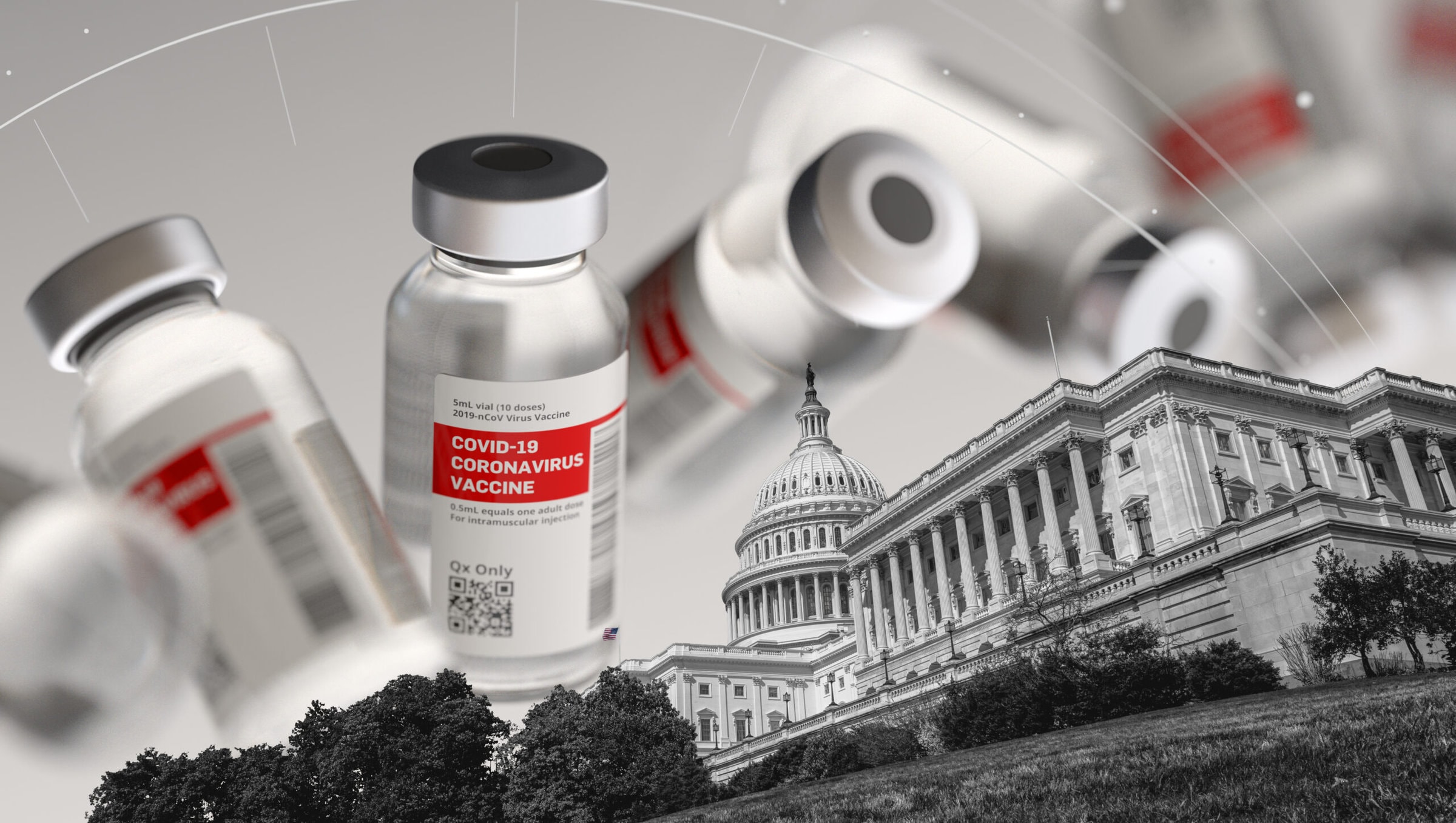
In September 2021, the Biden administration issued an Executive Order that required federal employees and contractors to receive vaccinations against the coronavirus.
The order attracted immediate controversy, and Republicans on Capitol Hill acted quickly in their effort to repeal the order’s mandate.
Just days after the White House announced the order, Senator James Lankford (R-Ok.) introduced the Stop Vaccines Mandate Act, with a companion bill being introduced in the House.
Known as the Freedom from Mandates Act, the latter legislation was introduced by Congressman Andy Biggs (R-Az.), who last week reintroduced the Freedom from Mandates Act, with designs on invalidating the September 2021 executive order.
Neither of those 2021 bills passed. If the legislation fares better this time, it would also prohibit the Secretary of Labor from issuing rules that oblige employers to mandate vaccines for employees or require testing for unvaccinated employees.
The federal government “may not force the American people to get a vaccine against their will,” Biggs said in a statement announcing the bill’s reintroduction, noting that Americans “must be allowed to make their own healthcare decisions. It is their right.”
Protecting Federal Employees
In the aforementioned executive order, the White House described the health and safety of the federal workforce and the public they serve as “foundational to the efficiency of the civil service,” and deemed “immediate action” necessary to protect federal workers and the individuals interacting with them.
“It is essential that federal employees take all available steps to protect themselves and avoid spreading COVID-19 to their co-workers and members of the public,” the September 2021 order read. “The [Centers for Disease Control and Prevention] has found that the best way to do so is to be vaccinated.”
At the time, the order determined that federal employees would have 75 days to get vaccinated, and decreed that workers who did not get vaccinated and did not meet the criteria for an exemption could be terminated. The order also eliminated a previously announced option that permitted federal employees to undergo regular COVID testing instead of getting vaccinated.
In addition to undoing the mandates that executive action put in place, the Freedom from Mandates Act would also forbid Health and Human Services (HHS) from requiring healthcare providers to mandate COVID vaccinations or testing as a condition of participation in Medicare or Medicaid programs, or otherwise penalize such a provider for failure to order such vaccinations or compel such testing.
As reported by FedSmith, the Safer Federal Workforce Task Force says the vaccine mandate is not presently being enforced, as a result of ongoing litigation in the courts.
“Lawsuits were filed over the vaccine mandate when it was first introduced,” noted FedSmith’s Ian Smith, “and an injunction was issued that prevented the federal government from continuing to enforce the mandate.”
Forecasting the Bill’s Fate
We’ll see if the Freedom from Mandates Act ultimately passes. At the moment, the bill’s likelihood of success is tough to assess, George Chuzi, senior counsel at Kalijarvi, Chuzi, Newman & Fitch, told HR News.
“On one hand, the repeal bill was introduced by one of the very conservative Republican Congressmen who opposed the mandate from the beginning,” said Chuzi, who represents both private and public sector employers. “Because the President has announced that the COVID emergency will end no later than May 31 [of this year], it may be a difficult vote to insist that it remain in effect under the circumstances.”
That said, the mandate likely saved many lives among the employees who were vaccinated, their families and their co-workers, continued Chuzi.
And, given the new evidence that variations of the virus will likely be as common as the flu, “an argument can be made that it’s in the national interest that federal employees continue to be vaccinated in order to protect themselves, those around them and the public with whom they come in contact. Whether there are enough lawmakers to pursue that argument is hard to predict.”
The forthcoming order that federal employees return to the office full-time could be a factor in whether or not the Freedom from Mandates Act becomes law, he said.
“If those employees return unvaccinated, and another COVID variant that is more lethal than the current one gains a foothold in the population, those who are not vaccinated will pose a renewed threat to their colleagues, both compromised and uncompromised.”
It’s hard to see how such an outcome is in the national interest, said Chuzi, noting that the bill also calls for repealing the mandate imposed by the Department of Labor on federal contractors. The Supreme Court held that this mandate exceeded the Executive’s authority, and it was never put in place.
“Finally, there’s the logical question raised by the repeal bill,” added Chuzi. “Why just this virus? Will those pressing for repeal next turn their attention to vaccine mandates in effect for measles? Polio? Smallpox? If not, why not?”
Presumably, public employees who are employed by entities other than the federal government are not affected by the mandate and would remain unaffected by its repeal, he concluded.
“State and local governments have been free to impose their own mandates, or not, and that structure likely will not change.”
06 February 2023
Category
HR News Article


