
May 2024
Minimizing Legal Liabilities: Social Media and Censorship in the Public Sector
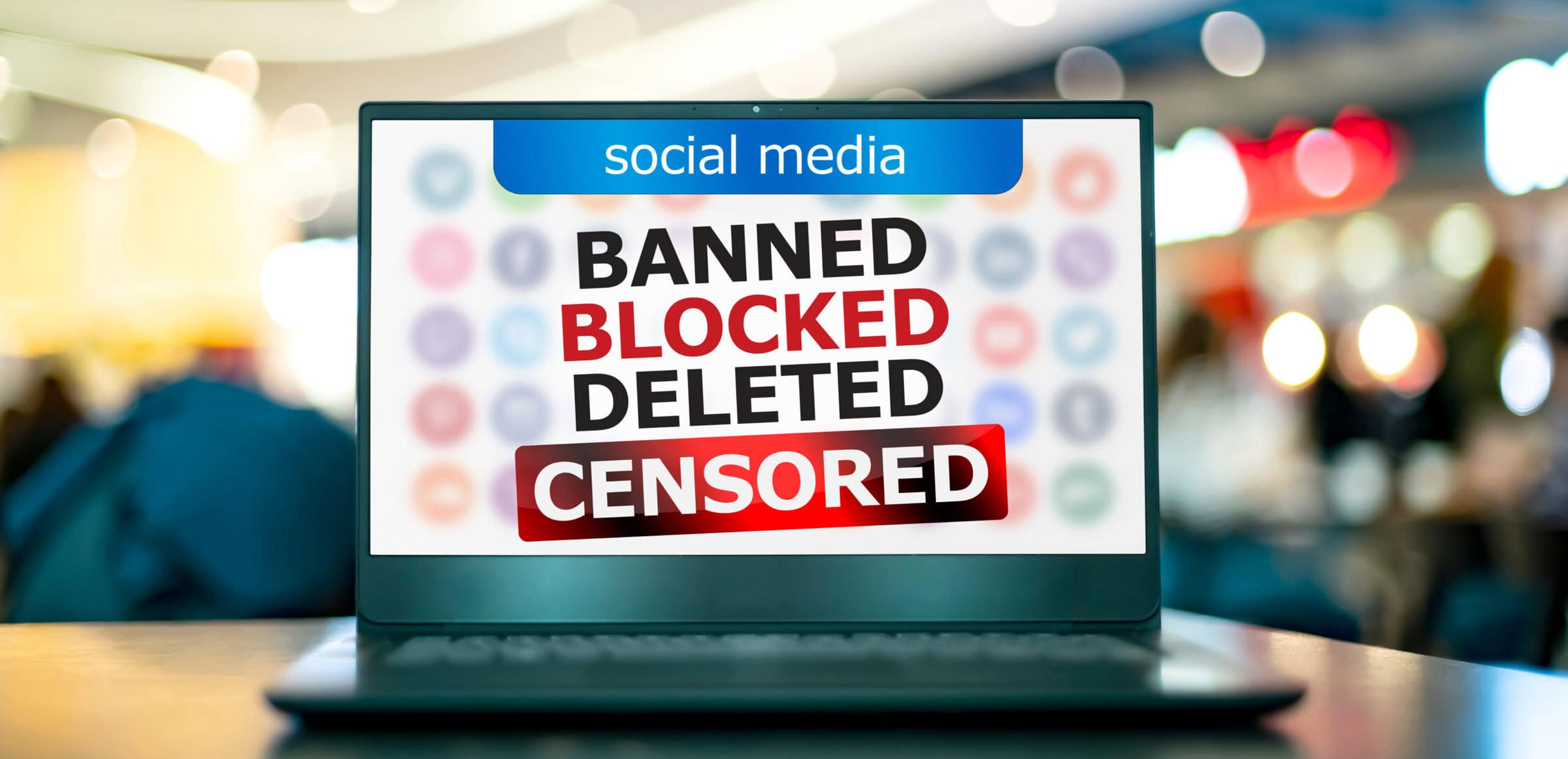
Members of the public who comment on social media sites—and later see their comments disappear or find themselves blocked—might not know that their First Amendment rights are potentially being violated. That may well be the case if the social media page belongs to a government official.
When might deleting comments from, or blocking access to, a social media page constitute a First Amendment violation? This term, the U.S. Supreme Court took up two cases—Lindke v. Freed and O’Connor- Ratcliff v. Garnier—in order to provide an answer. Let’s take a look at those two cases, the court’s answer, and how public agencies can help their officials avoid First Amendment liability for improper censorship.
Reviewing the Facts
The first case, O’Connor-Ratcliff v. Garnier, involves two members of the Board of Trustees of Poway Unified School District (PUSD), near San Diego. In 2014, those two individuals created public Facebook and Twitter pages to promote their campaigns for office. As the Court of Appeals’ opinion described:
“After they won and assumed office, the two used their public social media pages to inform constituents about goings-on at the School District and on the PUSD Board, to invite the public to Board meetings, to solicit input about important Board decisions, and to communicate with parents about safety and security issues at the District’s schools.”
The Garniers, parents of two children in the district, often left comments on the social media pages that were critical of the trustees, and at times re-posted the same, sometimes lengthy criticisms. The trustees first deleted or hid these posts, and then eventually blocked the Garniers from the pages, whereupon the Garniers sued.
The second case, Lindke v. Freed, involves the Facebook page of James Freed, the city manager of Port Huron, Mich., who posted both personal content and content related to his job. As the Court of Appeals’ opinion described:
“Freed was an active Facebook user whose page featured a medley of posts. He shared photos of his daughter’s birthday, his visits to local community events and his family’s weekend picnics. He also posted about some of the administrative directives he issued as city manager. And when the COVID-19 pandemic hit in spring 2020, he posted about that too, sharing the policies he initiated for Port Huron and news articles on public-health measures and statistics.”
Plaintiff Kevin Lindke took issue with how Freed was handling the pandemic response, and posted critical comments on Freed’s Facebook page. Freed responded by deleting the posts, and by eventually blocking Lindke from commenting.
The federal appellate court in Garnier found in favor of the parents who had criticized the Trustees, concluding that the Trustees had violated the First Amendment by censoring the parents’ commentary. By contrast, the appellate court in Lindke found in favor of the official. Both cases turned on the key disputed legal issue of whether the officials’ activities on their social media pages constituted “state action.”
On March 14, 2024, the U.S. Supreme Court issued its decision in Lindke. The opinion sets forth the test for determining when “state action” exists under these circumstances. The official must have both possessed actual authority to speak on the state’s behalf on a particular matter, and purported to exercise that authority when speaking in the relevant social-media posts.
As to the test’s first element, such actual authority must be “rooted in written law or longstanding custom to speak for the State,” and must extend to speech of the sort that caused the alleged rights deprivation. The Court noted that if Freed’s Facebook page had carried a label or disclaimer stating that his page was personal or the views expressed his own, “he would be entitled to a heavy (though not irrebuttable) presumption that all of the posts on his page were personal,” and hence not “state action” that could lead to liability.
The U.S. Supreme Court sent the Lindke case back to the appellate court to apply the test described above. The same day, March 15, 2024, the Supreme Court vacated the decision in Garnier, and remanded the case back to the other appellate court to review it in a manner consistent with Lindke.
Proactive Agency Practices
How can agencies honor their obligations under the First Amendment, yet avoid having their public officials’ social media pages serve as inadvertent message boards for certain types of content posted by the public?
First, agencies can recommend that public officials separate their personal social media presence from the pages they intend to use that have any significant relationship to their government work. This may mean one page for personal use (ideally limited to friends or other particular connections) and one page related to the individual’s government work.
Public officials should also consider clearly differentiating between their personal and official social media pages, including placing disclaimers on their personal pages, e.g., the page is personal and the views expressed are the individual’s own, and keeping their personal social media pages private.
For public official social media pages that do carry out state functions, and meet the Lindke test, public officials can set up their own rules or guidelines for how their pages should operate so that their decisions to curate comments comply with First Amendment standards. Indeed, cities, counties, special districts and other government agencies that maintain their own social media pages already often do, and should, have such policies.
In general, the policy must satisfy the “forum analysis” standards of free speech law, a primary requirement of which is that the policy operates in a “viewpoint-neutral” way. This means that the public official in almost all circumstances cannot suppress one view on a topic yet allow comments favoring the opposing view.
The U.S. Supreme Court’s decisions in this area are making these rights better known, and this will likely generate increased litigation. It is best to be prepared in the event your agency receives a legal challenge.
About the Author
David Urban is senior counsel with Liebert Cassidy Whitmore, representing organizations such as public and private educators and public agencies in all aspects of labor and employment law. He can be reached at durban@lcwlegal.com.
01 May 2024
Category
HR News Article • HR News Issues • May-June 2024 Public Eye


