
June 2021
How much does your organization focus on the customer? The answer generally seems to be “not enough,” right?
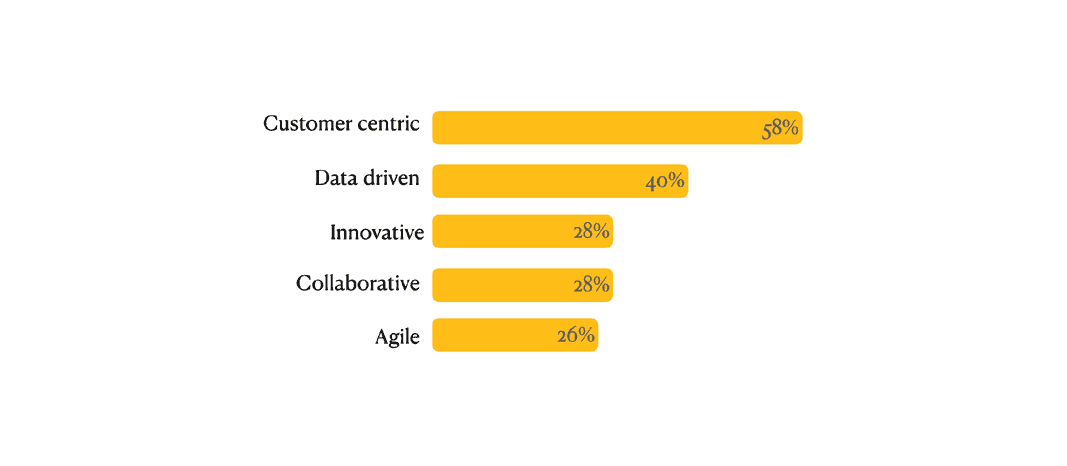
Over the last decade, executives everywhere have mandated, “We must become more customer-centric!” Whether the framing is “putting the customer at the heart of everything we do,” improving the customer journey or focusing on the customer experience, a decision to focus on customers does not come out of nowhere. It is intricately linked to the digital revolution, including the rise of social media. For instance, 58 percent of respondents to an Econsultncy survey conducted in 2019 indicated that being customer-centric was the most important characteristic for establishing a digital native culture. Other responses are shown in Figure 1.
Figure 1. Which Characteristics Do You Think Are Most Important in Establishing a Truly Digital Native Culture?
Focus on Employees First
When every organization pursues the same strategy, success depends on execution. Presently, leaders must answer the question of how to create an organization capable of delivering a superior customer experience over a protracted period.
Any workable solution requires driving up employee engagement. Having a quality product or service matters, as well. And it helps if the product or service is excellent.
But, in a world where there are so many points of contact along the customer journey, each spoke in the wheel contributes to creating a sustainably good customer experience. A string of different individual employees participates in bringing the customer experience to life through social media, marketing, online chats and forums, and customer service—which is usually the only department that has the word “customer’ in its title. The key to making everyone sing from the same song sheet in delivering excellent service lies in having an overarching and substantive mission or purpose. The quality that will help above all to solidify that mission-based superior customer experience is empathy.
Model Empathy for Employees by Showing Empathy Toward Them
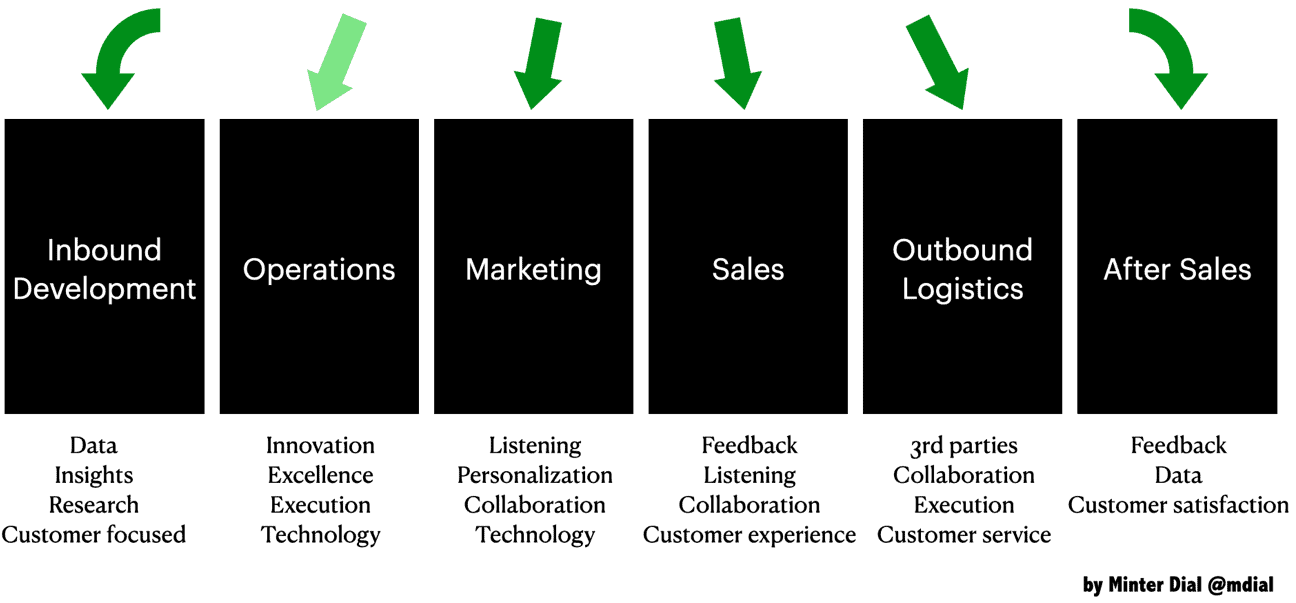
The magic of empathy is that it is useful in and outside the organization. Empathy manifests in the way you lead your team and how you interact with your external stakeholders, as is shown in Figure 2. When working to build a powerful culture of empathy, it is important to treat the members of your team in ways that are consistent and congruent with the ways you want those employees to deal with customers. That is, if you want employees to show empathy toward customers, you must also develop an empathic style of leadership.
Empathy is frequently confused with compassion and sympathy. At its core, being empathic is really about understanding what another person is experiencing, comprehending their thoughts and emotions. Researchers generally describe empathy as being either cognitive and affective, with the latter type involving feeling the same emotions as another person.
Figure 2. Delivering Value to the Customer Through Empathy
Showing cognitive empathy is more possible and pragmatic for organizational leaders and employees who interact with customers. If nothing else, showing cognitive empathy is less-draining and has wider application. Groups share experiences, but each person has a different emotional reaction to an experience.
Cognitive empathy can be useful throughout your organization and all along the customer journey. For example, insights based on cognitive empathy can be used to write better survey questions and to formulate deeper insights from survey results. Showing empathy is also materially important when collaborating with people, designing products and updating websites. In short, leading with empathy can build stronger relationships, generate better ideas and guide the delivery of superior service.
Affective empathy does have its place, especially at organizations that value diversity and inclusion. Leaders interact with a wide variety of employees and organizational stakeholders. Each interaction requires an empathic leader to take on a different mindset.
Empathizing with an employee’s feelings is absolutely essential to helping them onboard and integrate successfully. You must flex your empathy muscles in order to dial into the ways other people think and feel. While it is impossible for anyone to naturally or automatically understand each person, making a concerted effort to do so results in having high-quality, productive interactions with individuals who have different backgrounds and opinions.
How Does a Culture of Empathy Develop?
As is true when making any transformation, knowing how to inject empathy into your organization requires determining where the organization currently stands. You must begin by assessing how empathic your culture is in the first place and then set expectations accordingly.
All leaders must adopt the superpower of empathy in order to make it part of the general culture of the organization.
Be aware that people tend to overrate their own empathy and that others are likely to underate the empathy they receive. As an illustration of this, an ongoing survey for which I have collected nearly 10,000 responses reveals that 73 percent of respondents rate themselves as having either a well-above-average or above-average level of empathy. The takeaway lesson is any assessment of empathy within your organization must be undertaken with clear eyes and a commitment to soliciting candid feedback.
Be Intentional
The second step consists of carefully considering the expressed intentions behind the desire to develop a more empathic culture. The more intimately the intent is tied to achieving a higher purpose and carrying out the organization’s strategy, the better the chances of successfully introducing empathy in processes and procedures will be. As a leader, it will be vital to set the tone yourself. Leading from the top is especially important when it comes to transforming the culture and changing employees’ mindset.
That said, and as fervently as I believe in the power of empathy, it is crucial not to impose a tyranny of empathy in which everyone feels they must act with empathy toward everyone else at all times. Not only is doing that not feasible, it’s not desirable. Expressing empathy can be a messy affair, and not everyone will get it right every time, especially in the context of long-term relationships, during periods of stress or when time is limited.
Find Ways to Practice
Leaders can use a variety of tools and training exercises to expose employees to what showing empathy looks like and to help individuals display more empathy in their daily interactions. The empathy circle is one of my preferred exercises. This is a structured dialogue in which participants practice active and mutual listening skills. Creating an organizational environment in which active listening occurs routinely is essential if leaders expect employees to hear and speak with customers in empathic ways.
Reading well-written novels with characters whose backgrounds and profiles are different from one’s own also builds empathy. Last, I like to encourage self-empathy by coaching employees on engaging in mindfulness and being more present with one’s self.
Live Your Life With Empathy
Being empathic at work yields many practical benefits. It helps leaders better understand employees’ needs, wants, feelings and aspirations. Showing empathy can also help defuse conflict and clear up confusion. Further, many studies show how an empathic culture fosters well-being. Outside of work, being more empathic improves the ways you relate to loved ones, lead your personal life and function in your community.
Are you ready to develop your superpower of empathy?


