
August 2020
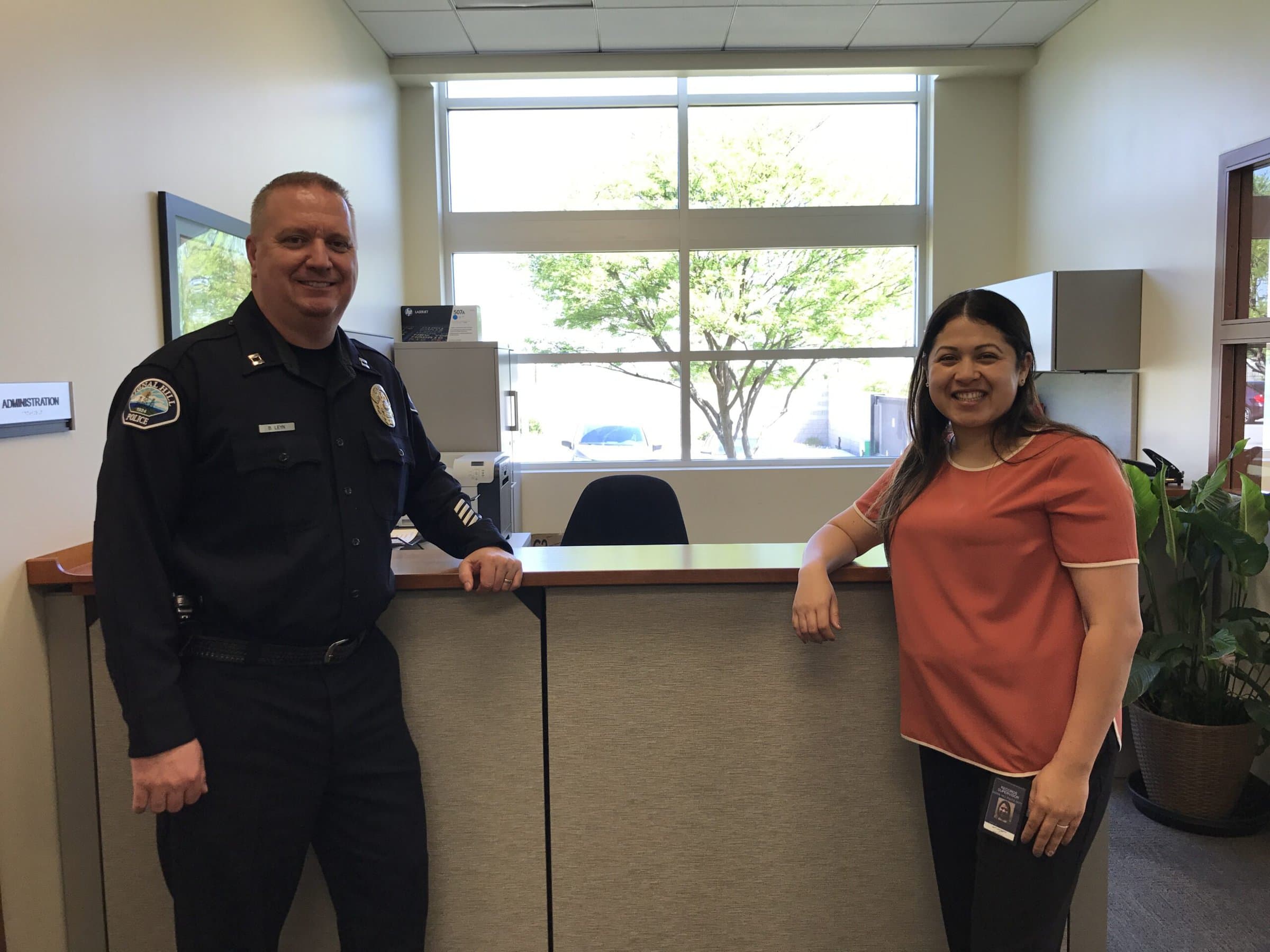
Policing a city with a population of just under 12,000 people within a boundary of 2.2 square miles has unique challenges. Signal Hill, Calif., in Los Angeles County, is rich in history and prides itself on being able to sustain itself financially, politically and, most of all, in terms of providing for the safety of residents. With the significant shifts in the political and social climate over the last 20 years, small police departments like those in Signal Hill are assessing how to adapt rapidly. Questions that require evolving answers are why separate police departments should exist and how they can be funded.
New and Ongoing Challenges
Because of COVID-19, all cities are projecting significant financial instability over the next few years. Cities will make budget cuts, and smaller cities are going to look at whether they need a police department. Planning for this eventuality is going to be the key for small agencies to avoid seeing law enforcement services being outsourced to another agency.
When the Great Recession hit in 2008, almost every police department in California had to lay off employees, including sworn officers. However, police departments still managed to perform their duties despite being understaffed.
The world is now dealing with a pandemic and has entered another recession. Small cities will see drops in hotel taxes and retail sales. Those that, like Signal Hill, host auto dealers may experience sustained deficits.
The auto industry is reporting significant declines in sales due to the COVID-19 pandemic. In March alone, Honda recorded a 48 percent decline. General Motors had a 7 percent decline, and Acura experienced a 51 percent decline.
This fiscal uncertainty arrives atop long-term budget pressures. On Aug. 1, 2019, the Sacramento Bee published an article on the rising costs of public pensions in California. The article stated, “Last year, the League of California Cities surveyed 170 local governments about their pension contributions, finding that most cities expected their contributions to increase by at least 50 percent by 2024, to an average of 15.8 percent of general fund budgets.” Not helping matters, employers’ required contributions to CalPERS, the state’s Public Employee’s Retirement System, have already increased substantially over the past decade, becoming a significant burden for small cities.
Civilians Must Play a Crucial Role
Small police agencies have long been stuck trying to do more with less. Budgets are limited, and hiring can be difficult because small agencies do not offer all the tools and assignments that larger police agency can. So, being creative in restructuring is essential. Restructuring is often associated with bad things such as layoffs, closures and failure. Redesigning, though, is an opportunity for an organization to push the refresh button to achieve better success.
In this age of ever-increasing technology and fewer viable police officer candidates, the leaders of small police departments need to get ahead of the curve and implement innovative changes. One approach is to move from the officer-generalist workforce model to a professional-specialist model. Transitioning to employing more civilians and deploying more state-of-the-art technological systems may even help a smaller agency survive.
Civilians can perform essential roles in a police department, especially as those duties become more complex. Sworn officers simply may not possess or have the time to acquire and use necessary knowledge and skills.
It may also help a department to establish two groups of civilian employees. One group can support the function of sworn commanders and supervisors, and the other group can support sworn line staff.
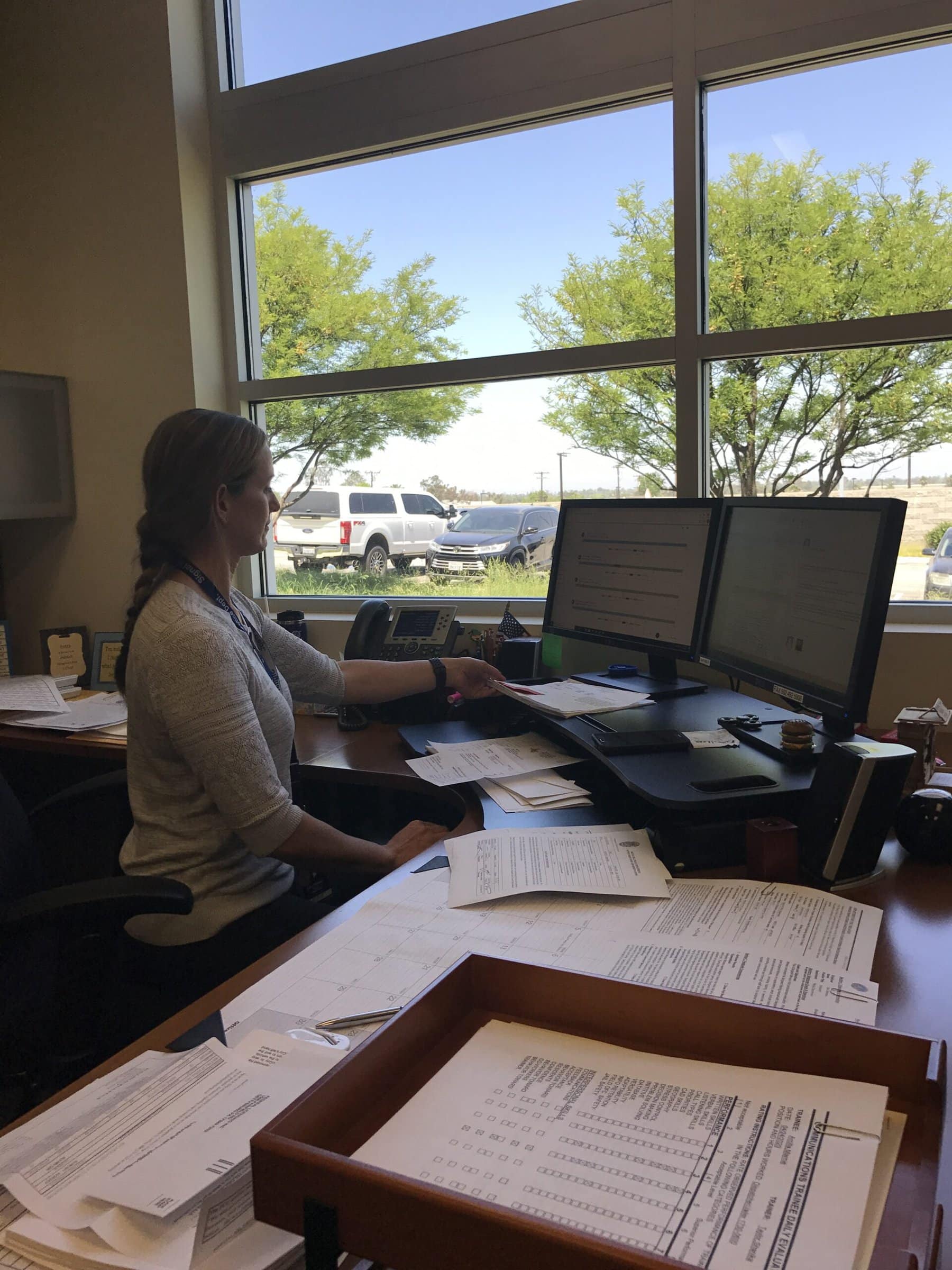
Such positions have existed for decades. During the late 1980s and 1990s, civilians made up approximately 7.5 percent of the law enforcement workforce. By 2016, according to data compiled by the FBI, 30 percent of law enforcement employees were civilians. What civilians do varies significantly across jurisdictions.
In the United Kingdom, civilian police employees are involved in investigations, intelligence, uniformed support, specialized policing and supervision. One UK force even assigns professional staff to investigate the most serious crimes. The Manchester Police Department has a homicide investigation unit made up of civilians. While the civilians have no arrest powers, their work led to the filing of charges in 85 percent of their cases over a two-year period.
Stateside, the Camden County, N.J., Police Department, which serves the City of Camden, has incorporated uniformed civilians into their patrol force. Those civilians, who do not have arrest powers, respond to radio calls for nonviolent incidents. They also relieve sworn officers doing administrative work on criminal cases so the officers can return to service.
Some agencies have even made it possible for civilians to serve as top-ranking officials. For instance, the commissioner of police for New York City need not be a career officer.
It is felt that a civilian commissioner will be more likely to maintain an objective viewpoint, while a commissioner who rose through the ranks of the police department could struggle to balance their allegiance to uniformed personnel and their duty to elected officials and the public. Civilian commissioners may also tend to focus more on strategic decision-making and addressing community concerns than on the details of police work.
Restructuring for Efficiency
As budgets decrease, it is time to make changes that seemed impossible in more robust economic times. Following Camden County’s lead and utilizing civilians in roles previous reserved for sworn officers makes sense. Carrying out the transition will present challenges and opportunities. Issues that must be addressed during restructuring are how the agency can become more efficient, which positions and functions the agency can do without, and what resources the agency needs.
The Corpus Christi, Texas, Police Department answered questions in those areas when it created “parapolice.” These departmental employees wear uniforms but are not armed and cannot use force. They conduct community policing outreach programs, do support activities and participate in some criminal investigations. A 2016 report by Envisage Technology noted that the parapolice “have the potential to perform as equals to both the public and police, and could even help to bridge the growing gap between the two.”
As valuable as civilian staff could prove in the field, they also have key roles to play in police management and administration. For instance, a civilian serves as the senior administrative manager for the Prince William County, Va., Police Department. That individual oversees budget and planning. A civilian also manages in-service training for the department.
Both employees alleviate the needs to assign sworn officers to tasks that do not require law enforcement skills. Managing the budget is a full-time job, after all.
Extending law enforcement capabilities does not end with taking over administrative duties. Civilian staff can perform many tasks traditionally assigned to cops. In particular, a department could benefit from having a civilian handle cybercrime investigations.
As for where agencies could find civilian employees, universities and community colleges enroll many people who study criminal justice but do not want to be street cops. Those individuals can be recruited to fill positions in recruitment, hiring, background checking, IT, budgeting, training, public relations, public outreach and volunteer coordination. The hiring pool for law enforcement positions will increase when civilians are provided more opportunities.
Using Technology to Amplify the Work of Sworn Officers
In-vehicle computers, advanced fingerprint matching and DNA analysis became standard in law enforcement during the 1990s. Today, departments are learning to integrate drones, robots, kiosks and predictive analytics. Deployed properly, the new tech tools can replace officers in the field and at police stations.
This is already happening in China, where AI kiosks at an unstaffed station take reports, scan faces and answer questions. A small police department utilizing such technology could increase the practical size of its force without hiring additional sworn personnel. Civilians could run the equipment.
Writing recently for Police Chief magazine, Vern Sallee describes police drones as first responders that usher in a “new paradigm in public safety. Small agencies could undoubtedly benefit from using drones for surveillance that would significantly tie up the time of a sworn officer.
Even more simply, but no less valuably, creating and maintaining detailed computer databases will allow police departments to better serve their communities. Databases enable police to pinpoint neighborhood hotspots, capture input from community members and prevent crimes. Tasking civilian employees with collecting, inputting and securing data, again, extends the capabilities of sworn officers.
Change May Not Come Easily
Rooting out traditional thinking about how to do law enforcement can be difficult. Changing a culture that has held sway for decades may cause the people in the organization to feel vulnerable and weak.
Making the case for redesigning operations at small police departments starts with pointing out that such agencies are especially susceptible to budget cuts and difficulties with hiring sworn officers. Adding civilian employees and optimizing the capabilities of emerging technologies produces cost savings while increasing the ability of sworn officer to work as officers.
Building an arsenal of technological tools also enhances the ability to combat cybercrimes and stay current with changes coming to society, such as autonomous vehicles and robots.
Even more importantly, restructuring makes a small police department more efficient and sustainable. Incorporating civilian staff into roles usually filled by sworn personnel streamlines operations and moves the department forward. Sworn officers will no longer have to focus on ancillary duties such as budgeting, training and hiring. Instead, they can focus solely on meeting the law enforcement needs of the community.


