
October 2021
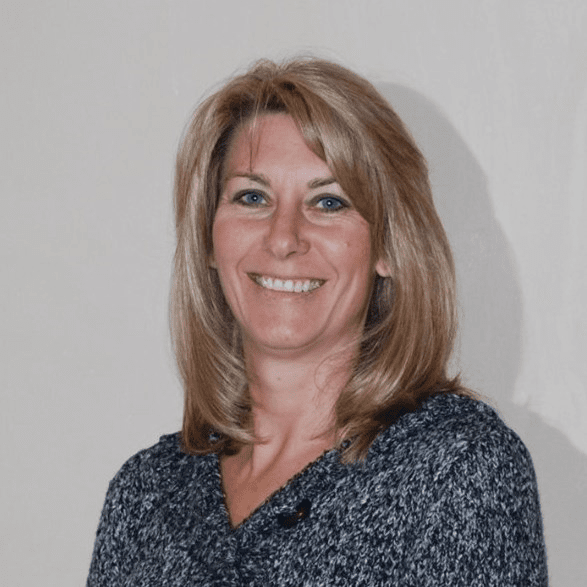
Situated almost exactly halfway between Salt Lake City to the south and Ogden to the north, Farmington is the county seat for Davis County. One of Utah’s oldest communities, the city is home to a resort, campground and amusement park/waterpark currently known as Lagoon that has operated continuously since 1886. This interview was conducted over email, and the responses have been lightly edited.
Census numbers published in August show Farmington grew rapidly over the last decade. Has the city’s workforce grown to keep pace with the increased demand for services? If so, have you and hiring managers developed any particularly effective strategies for recruiting and retaining municipal employees?
www.farmington.utah.gov
We have grown dramatically as a community. We are leanly staffed and will be for a number of years to come. However, we are trying to become more competitive by attempting to match average wages within Davis County and across other cities of similar size (pop. 15,000–35,000). We have also started advertising our open positions in more locations, which seems to help.
You only fairly recently became the full-time human resources manager for Farmington. For several years, you split time as city recorder. How did you juggle the duties of your dual role? Was establishing and maintaining partnerships with other department heads important to ensuring the HR needs of the city’s workforce were met?
When I started with the city 16 years ago, we had approximately 40 full-time employees. The majority of those employees had worked for the city for several years. We saw very little turnover, and we hired one or two new employees each year. Human resources was then the “fun” part of my job.
Because we were so small, I was able to get to know most of the employees on a personal level. We were all like family and very much enjoyed going to work together. I attended executive staff meetings, planned lunch-and-learns every other month, implemented a Giving Tree project for the holidays, and organized the citywide Christmas party, birthday parties, retirement parties, health fairs, etc.
However, the city recorder duties were my main focus and took up the majority of my time. I wanted to learn as much as possible and get all the certifications for that position. I am pleased to say I was able to accomplish that.
I have found that I do more and work harder if I make lists. (I love to cross things off.) So, in addition to my daily responsibilities of both positions, I created a list of all the long-term projects I wanted to work on—things I felt were good ideas or would help the organization.
When I completed my everyday tasks, and only if I had free time, I would pull out the long-term projects list and start working on project item. As time went on, my free time became nonexistent as day-to-day HR tasks increased dramatically. We now have approximately 90 full-time city employees, and 400 employees total.
I was putting in a lot of hours and was at a point where I could only do enough of both positions to get by. There was just not enough time any longer to give each position the attention it needed, so the full-time HR manager position was created.
Since becoming a full-time HR manager, what steps have you taken to build a human resources team? Or are you still pretty much a department of one? Either way, what does a typical day on the job entail?
It has been difficult at times because I am still a one-person team and probably will be for a while. My day is generally spent processing new hire paperwork, meeting with employees on various issues and working with department directors on recruitments and personnel issues.
The city manager regularly asks me to provide him with sections of our personnel policy manual and pay analysis information. Currently, I am working on updating our pay ranges for next year and on ways to provide more information to our employees. I have started sending out notes about the things I can share from our director’s meetings to all the employees each week, and I have started a monthly employee newsletter.
IPMA-HR has been proud and appreciative of all its members’ efforts to protect public sector employees throughout the COVID-19 pandemic. Would you mind sharing a bit of Farmington’s experience over the past 18 months?
The past 18 months has been very challenging. We have had to change the way we do a lot of our processes.
For a number of months, we shut down most of our face-to-face interactions with the public and had employees who could do so working from home. Employees were great at taking turns coming into the office so we could keep a presence in our buildings, especially City Hall.
In an attempt to prevent the spread of the virus, we asked all personnel to wear masks and social distance when they were in the office or dealing with the public. We were largely successful in preventing the virus from being spread at work.
As I’m writing this in late August, we are all back in the office and are washing our hands and using sanitizer, but we’re no longer requiring masks. We have continued to broadcast our city council meetings over Zoom for those that may have health concerns while also allowing residents to attend in person.
There have been some discussions about what might need to be done with the resurgence of the virus. Right now, we encourage but do not mandate vaccinations for employees. Those who are exposed to or come down with the virus are required to use their vacation or sick time. We did not extend the paid leave for COVID. We may need to make other adjustments if things continue getting worse for an extended period of time.
Beyond pandemic response, are there major HR projects you have undertaken while leading the function for Farmington? What makes those projects stand out as successes?
I have been successful in entirely updating the city’s personnel manual and getting the revision approved by the city council. Currently, I am redoing each job description and making sure all are up to date and formatted in the same way.
As I mentioned before, I created an employee newsletter to keep city workers better informed, and I put together an HR contact list for cities and counties in Utah for my own use and to share with everyone on the list. I have also spent a large amount of time working with our finance director going over salary surveys and matching our positions with similar positions at other entities. This has led to some substantial adjustments in individuals’ pay. In all cases, it has been very helpful to show employees how their pay compares with what others in the same position elsewhere receive.
So far, my projects have gone very well and great things have come from them. It is so nice to be able to focus on one position and really grow with it and make it better.
Enough with the serious HR questions. In fact, imagine you have a full month off work and no other worries. What do you spend that month doing?
Wow, that would be wonderful!
My first thought would be to spend as much time as possible with my kids and grandkids, preferably on a cruise or beach somewhere. My family brings me a great amount of joy, and I absolutely love spending time in the sun boating, camping, hiking, fishing and just about anything else.
I also enjoy reading, watching movies and traveling, and I am a diehard football fan! I do love my job, though. I am very lucky to have such a great group of human resources professionals to work with in Utah who have helped me all along the way. —N


