
November 2021
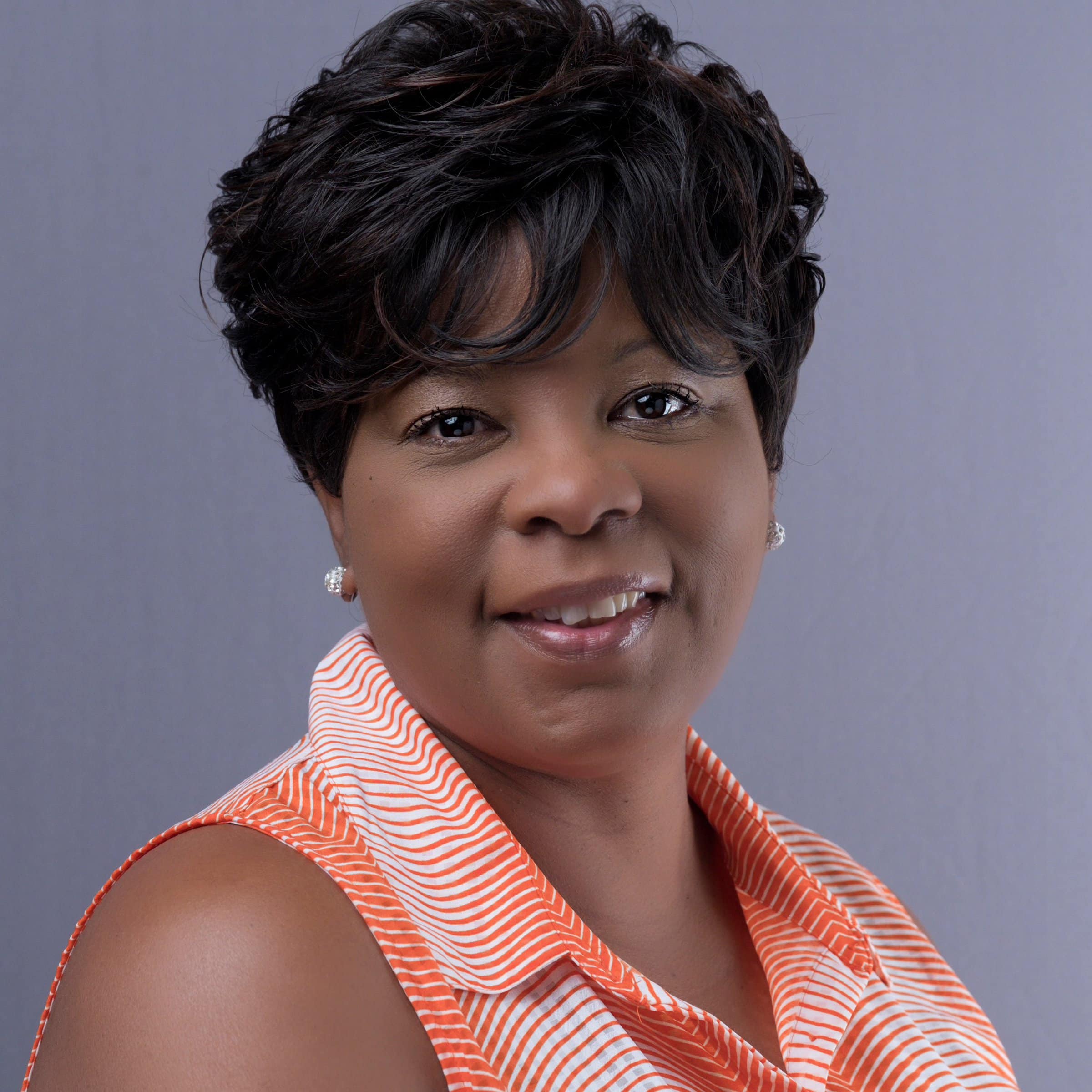
BMHA serves residents of Butler County, which is immediately north of Cincinnati. Headquartered in Liberty Township and with satellite offices in Middletown and Hamilton, the agency’s mission is “to address the housing needs of society, discrimination free; increase access to affordable housing; [and] support community development and offer economic opportunities within our communities.” This interview was conducted via email, and response have been lightly edited.
Tell us about the Butler Metro Housing Authority. How many employees do you provide human resources services for, and what does your day-to-day job entail?
We are a political subdivision of the State of Ohio and have been serving Butler County since 1938. Originally, the agency was named the Hamilton Metropolitan Housing Authority, but it was renamed in 1966 to better describe the services we offer. Currently, we administer two types of programs for low-income families—a housing choice voucher program and public housing.
www.butlermetro.org
Under the housing choice voucher program, participants who receive vouchers search for their own housing amongst properties maintained by qualified private landlords. The vouchers are portable anywhere in the United State, including Guam, Puerto Rico, Alaska, Hawaii and the Virgin Islands. Our program currently has 1,779 voucher holders.
Our public housing program provides affordable housing opportunities for low- and moderate-income households in units owned and operated by BMHA. We currently own and maintain over 974 apartments and 158 houses within the cities of Hamilton and Middletown. We offer 24-hour maintenance service to our public housing tenants.
Federal funds from HUD are provided to us to administer the housing choice voucher program, as well as to maintain and administer our public housing units. Currently, we have a staff of 38; however, we are severely understaffed, with 13 vacancies we need to fill.
There are no typical days here at BMHA, and my day-to-day activities vary. I am an HR department of one, so my days are filled with handling payroll, recruitment, personnel issues, training, updating policies, accounts payable, employee evaluations, tracking PTO accrual and usage, and processing workers’ comp claims, to name just a few things.
We are also preparing for a major shift in our operations due to RAD—Rental Assistance Demonstration—conversion. RAD was created to give public housing authorities such as ours a tool to preserve and improve our properties. The conversion allows us to obtain funding from sources like tax credits or state and local grants to repair our properties. Converting from our original sources of HUD financing is a huge undertaking, and preparing staff for the change is another component of my day-to-day duties.
Like many of the IPMA-HR members we’ve profiled this year, you did not set out to find a job in human resources. What drew you to this profession after serving in the U.S. Air Force? How hard was making the career change, and did you have coaches or mentors who helped you learn on the job?
Since leaving the Air Force, most of my positions have been with a government entity—federal, city and, now, local. I’ve typically held administrative roles, but my job varied with each agency.
It wasn’t until I moved back home to Dayton in 2004 that this changed and I started working for a private firm handling a team of technicians across the United States. That, unintentionally, steered me towards my present human resources role.
I began my career here at BMHA in October 2007 as a temp. The original assignment was for a week, but it was extended for another week while the agency waited for the results of a background check on a candidate. Then, as either their luck or mine would have it, things didn’t go according to plan and my time here was extended beyond a month.
Not to pat myself on the back, a competition, if you will, started up between two managers to have me fill vacant positions in their departments. Because of the skills I possessed in payroll and certain aspects of my military background, I was hired as the payroll/budget assistant in November 2007 while the BMHA was also recruiting for an HR generalist.
Again, things didn’t go as planned. Due to the fact I was already handling the responsibilities of an HR generalist, my job title changed to HR/payroll specialist in 2008. With the growth of BMHA and the increased responsibilities I acquired, my title was changed to HR director in 2017.
I did not have the luxury of coaches or mentors when I took this position. In fact, the prior HR manager left the agency before I arrived. I relied on knowledge I had from prior experiences, but translating what I learned in the military, at federal agencies and in the private sector to a local public housing authority was challenging. While there are some similarities, there are many differences across those organizations.
I take it upon myself to attend conferences, trainings and seminars whenever possible. Prior to hearing about IPMA-HR, the SHRM website was one of my go-tos for interacting with other HR professionals and obtaining helpful information. Since then, I have found IPMA-HR to be of the utmost help, as it speaks the language of the public sector.
Most of all, I welcome opportunities to meet other HR professionals locally or via other means. It’s important to share ideas, logic, quirks, suggestions and feedback.
What are some of the unique personnel needs for BMHA, and how do you meet those challenges?
Across BMHA, we currently need to fill 10 vacancies in existing positions and to hire for three new positions. With so many vacancies and so few candidates applying, we’ve had to alter our day-to-day activities to ensure we meet the expectations of our residents while we look to become fully staffed.
As HR director, I also face the unique challenges of providing training to staff in preparation for RAD conversion and planning for the organizational restructuring that will follow. Though I am working to achieve success in certain areas, the challenges seem to outweigh the results at this time. But I remain optimistic that slow and steady wins the race. Unfortunately, there’s more to completing a marathon than doing a sprint.
Building from the preceding question a bit, do any of the HR projects or programs you have implemented over the years stand out as particular successes or career highlights?
Unfortunately, our agency is behind the eight ball when it comes to HR technology. Many of my processes are manual, which ties up a lot of my time. I am looking to change that by automating time and attendance, absence management, benefits administration, onboarding and talent acquisition, just to name a few.
I’m also looking to update our policies and job descriptions, create a safety program and revamp our performance appraisal system to be more engaging. When all this is accomplished, those projects will be my successes and career highlight. But, baby steps.
Just making something as simple as enabling employees to view their paystubs and W-2s a task that I no longer have to tackle myself speaks volumes. Not too many months ago, I handled this by printing out paystubs and benefits accrual statements, folding sheets of paper, placing documents in envelopes and handing packets to individual employees in person. Automating this one process by providing employees access to our payroll provider’s online portal has freed up considerable time to concentrate on other more pressing matters.
The gain in time hast come with a downside. Because I’m not physically located in the same building with our administrative employees, my ability to see, interact with and speak briefly to staff has decreased. I never want to give the impression I’m unreachable or isolated.
Most BMHA staff hold jobs that require a high degree of personal interaction with residents, landlords and contractors. What did you and the agency do to protect employees and clients throughout the pandemic?
Our administrative and exempt employees normally work four 10-hour days, Monday through Thursday. Maintenance staff work five 8-hour days, Monday through Friday. During the first months of the pandemic, we closed our offices from mid-March to May. When we returned to in-person work, we did so with reduced staff by operating in two teams.
Administrative Team 1 worked Monday and Tuesday, and Administrative Team 2 worked Wednesday and Thursday. Maintenance personnel operated similarly, with their Team 2 working Thursday and Friday. Administrative offices were closed on Fridays, and maintenance buildings were closed on Wednesdays. We had our cleaning contractor do deep cleanings during the closure days.
Our split schedule reduced the number of employees on site, which enabled us to be socially distant to a greater degree. We also mandated face masks for administrative employees when they traveled out of the office, and we asked staff to bring in their lunch and eat at their desks. Throughout the day, staff were asked not to loiter around each other’s areas.
We instructed maintenance staff to wear masks when visiting residents’ homes and in common spaces shared with coworkers.
Through 2020, our administrative offices were closed to the public and we shifted all our operations to phone or online access. When emergencies occurred, we allowed some tenants who did not have a computer to use to schedule a time to come in to our main office when we could ensure minimal contact with employees.
We resumed normal operation in January 2021, with staff returning to their regular schedules with some restrictions. In-person visits by tenants were reinstated in July of this year. When the governor of Ohio lifted the mask mandate in June 2021, we did so as well. But we have since returned to requiring employees to wear masks when they are working outside the office. Also, all visitors are required to wear masks when conducting business at our main office.
Maintenance employees are once again required to wear masks when they enter a resident’s home and in places where social distancing is limited.
You mentioned above how you are among the many Association members who constitute an HR department of one. Do you have any tips or tricks for making sure nothing falls through cracks? How about establishing professional partnerships with other department heads so you are not always the person doing everything regarding staffing, compensation, benefits administration, etc.?
I’m sure other Association members who are a department of one can offer tricks and tips that work for them depending on the complexity of their position and the day-to-day challenges that arise. For myself, I find organizing, planning, discipline and structure are key.
First, solo HR practitioners tend to know the employees we serve on a professional and personal level. This is an advantage given the responsibilities of our position. We must be empathetic, caring, kind, patient, understanding and good listeners. As challenging as that can be at times, knowing our employees gives us a deep well of understanding to draw from.
This is a very stressful profession. We must keep abreast of changing laws, technology, staffing needs, policy changes, etc. There’s a constant need to adapt to circumstances. I wish I could say for me every day is the same as the day before. Since that’s never the case, planning my day as much as possible is helpful. I try to leave space in my schedule for “the unthinkable” to occur without disrupting the flow of work too much.
I’m also a firm believer—and many may disagree—that checking emails every five minutes isn’t productive. BMHA staff know that if they have a problem of major importance, they should call me or use Microsoft Teams to send a message.
The Outlook Calendar plays a major role in ensuring nothing falls through the cracks. It and sticky notes serve as my personal assistant. Plus, and on top of my military background, I’m OCD to the extreme. I loathe dysfunction, so I’m big on everything being in the right place, on time, neat and orderly. (I’m the same outside of work, and it drives my family mad.)
As far as establishing partnerships with other department heads, I have no doubt that is the goal within any organization. However, when it comes to HR issues, most managers would rather be hands-off, especially if they don’t possess the expertise to deal with a matter. They’d rather let HR handle a situation than create more of a headache for the HR director to correct.
What I find helpful for anyone is separating work from home, and vice versa. When I walk out the office door, I leave work behind as much as possible. That can be difficult for me, however, as I consider myself always on-call.
Last, and on a much lighter note, what are you watching these days? Movies? TV shows? Share your favorites and maybe win over some new fans.
I am a huge sports fanatic, with football being at the top of that list. Go Steelers, 49ers and Ohio State!
Most of my TV viewing involves cooking, DIY and Forensic Files-type shows. I dislike dramatic or reality shows because I have enough of both in my HR role. I won’t watch the news, either.
When there’s absolutely nothing I care to watch on current TV, I revert to some of my old favorite family sitcoms like Golden Girls, Hot in Cleveland, Cosby Show, Two & Half Men (Charlie Sheen not Ashton Kutcher), and Everybody Loves Raymond. I will venture back even further to some oldie-but-goodie shows like The Avengers (Steed & Peel), Perry Mason, Starsky & Hutch and Carol Burnett, which may be telling my age.
I will also add: HUGE Betty Boop fan!
Outside of that I like planning events, gardening and spending time with family, especially my five grandchildren. Unfortunately, only my 3-month-old granddaughter is local. She’s my stress reliever!
I also love to volunteer my time and talent as much as possible. It brings me so much joy! If I could do volunteer work on a full-time basis, you would get no complaints from me. —N


