
September 2024

Gary Butterworth is a proponent of the stay interview. But he’s not crazy about the term itself.
“I don’t like the sound of ‘stay interview,’” Butterworth recently told the 40 HR leaders in attendance at his PSHRA24 presentation on “The Bespoke Career-Centered Conversation.”
“It sounds too bureaucratic. It sounds too much like an exit interview. I prefer ‘bespoke career-centered conversations.’”
There are, of course, important differences between exit interviews and stay interviews.
He ran through these differences for the conferencegoers gathered in the Farragut/Lafayette conference room at the Grand Hyatt Washington for Butterworth’s Friday afternoon session.
For instance, he said, exit interviews are reactive, they involve an employee who’s already decided to leave the organization, and generally gather insights that take time, analysis and upper management approval to be actionable.
Career-centered conversations, on the other hand, are proactive, focus on a current employee the agency wants to keep, guide individual employee retention efforts and are generally actionable immediately at the supervisor level.
Butterworth spent nearly nine years as a facilitator in the staff services and development department with the County of Ventura in California. Before that, he served for six years as manager of learning and development with the County.
He recently retired, but the 70-year-old Butterworth still works as an educational consultant, and he characterizes his current role as that of a trainer, educator and leader.
As a trainer, “we try to engage [the trainee] as much as we can” to earn their trust and ultimately maximize their learning experience, Butterworth told the audience. “And that’s the idea of a stay interview. When you engage an employee, you gain their trust. And trust begets retention.”
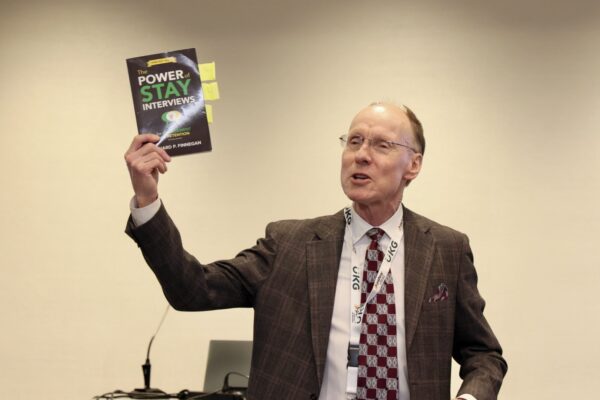
Conducting periodic career-focused conversations helps identify potential issues well before a given employee is considering leaving.
“Once you’ve got that trust established through these conversations, there’s almost no way an employee is going to surprise you and leave,” Butterworth said. “You’re going to know if someone is unhappy with something in their job, because you’re talking with them frequently.”
Career-centered conversations also help the organization see what it’s doing right, he added.
“You can find out through career-centered conversations what sort of good things you have happening. You hang on to those, and then ask what you can do to make their job better,” said Butterworth, noting that many employees might not share that kind of input in the first or even second conversation.
‘But once you’ve established that trust, they will.”
So, what exactly is the bespoke career-centered conversation? Butterworth defines them as informal discussions that leaders conduct with each direct report, to gauge how employees feel about the work they do and the value of their contributions to the organization. This results in specific actions a leader must take to strengthen employee engagement, trust and, ultimately, retention.
The objective of these conversations, he said, is to generate personal, authentic responses by the employee, which give rise to actionable answers and solutions from the leader. Butterworth also offered examples of questions that should be included, such as:
- What do you look forward to each day when you commute to work?
- What are you learning at our organization and what do you want to learn?
- Why do you stay here?
- When is the last time you thought about leaving us and what prompted it?
- What can I do to make your job better for you?
The ultimate question of whether a career-centered conversation was successful, he said, is a simple one: Is the leader more trusted after conducting the interview than he or she was before? Butterworth also stressed the importance—and the art—of supervisors providing useful feedback during these discussions.
“Good feedback from a supervisor should sound positive, even if it’s negative,” he said. “It depends on how its delivered, and supervisors should be skilled at delivering feedback that’s constructive.”


