
September 2026
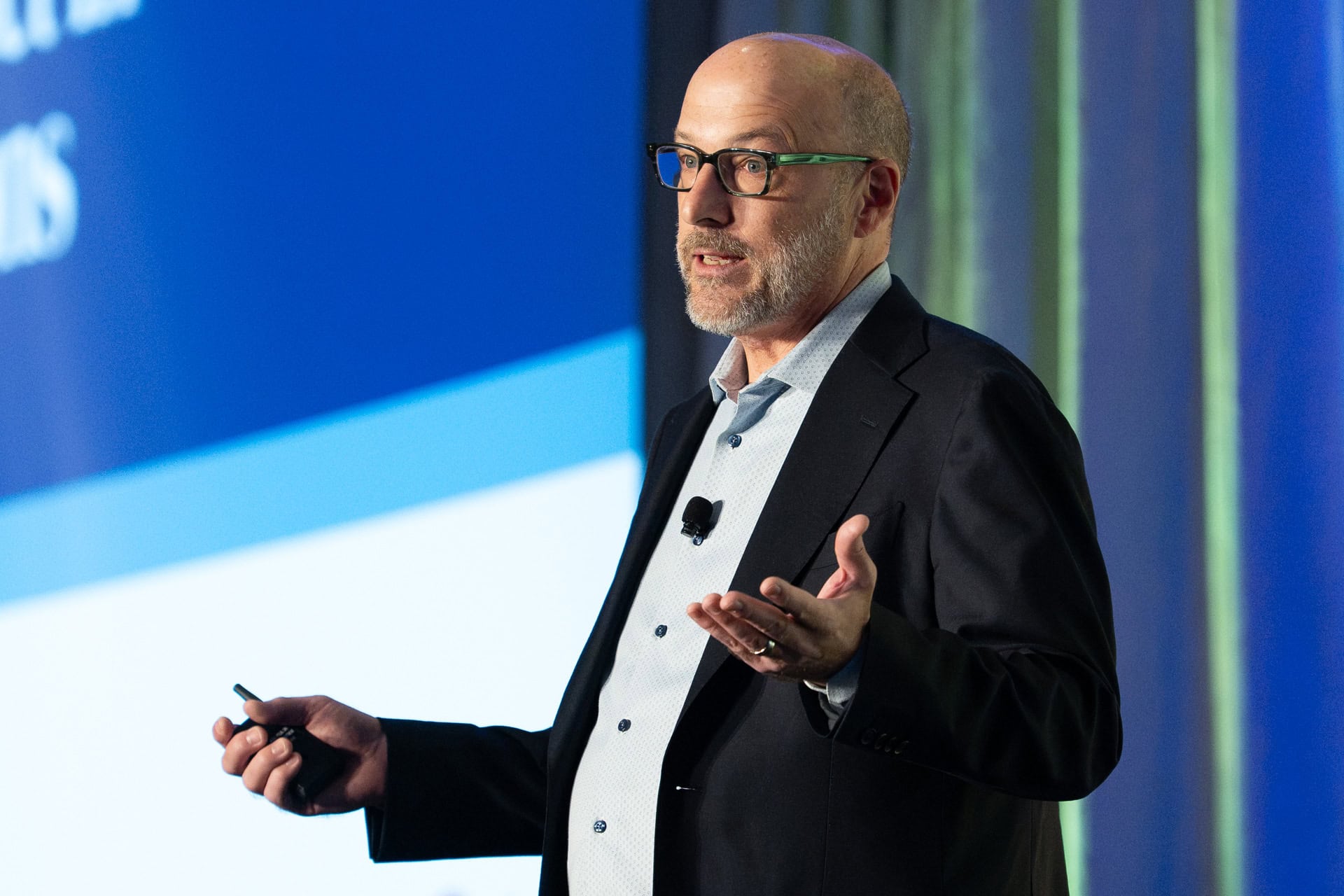
(Photos courtesy of Adam Bacher)
PSHRA26 opening keynoter Jamie Notter is a speaker, author, advisor, culture scientist and self-described “amateur comedian.”
Notter is also a runner.
Or at least he was. As Notter delivered his keynote presentation to the 600-plus PSHRA26 attendees gathered in the Hilton Portland Downtown’s Grand Ballroom on Monday morning, he talked about the IT band syndrome that has slowed him down in recent years.
Notter started a course of physical therapy to help ease the knee pain that the common overuse injury causes.
“The physical therapists moved my leg in ways that I didn’t think it was supposed to move,” said Notter with a laugh. “But it didn’t break me. It stretched me, but it didn’t break me.”
In the end, the physical therapy offered Notter and his troublesome knee some much-needed relief. He has a similar outlook toward conflict resolution. Handling a conflict within an organization or a work team should stretch those involved, but it shouldn’t break them, he said in his presentation, titled “The Secrets to Good Conflicts in Organizations.”
And “good conflict” not only doesn’t break the parties involved, but it can lead to stronger connections, said Notter, whose 30-year career includes more than a decade spent researching culture change.

Of course, a key first step to resolving conflict—and one that Notter sees some organizations struggle with—is overcoming the reluctance to meet it head-on.
“People don’t like to talk about conflict. They don’t like the word.”
Putting the word itself aside, “I’ve learned that conflict is a good thing,” continues Notter, who has authored four books, including the award-winning Non-Obvious Guide to Employee Engagement, and his 2024 release, Culture Change Made Easy.
“It’s natural. It’s part of everyone’s social system.”
And, ultimately, he says, conflict boils down to two parties—spouses or members of a work team, for instance—pursuing different outcomes that they perceive to be incompatible.
The scenario could be a simple disagreement over where to eat dinner. Or it could be two co-workers at odds over the direction of a crucial project; a disagreement that could potentially derail that project and hurt the organization.
Such conflicts are inevitable, said Notter.
In fact, “it would be weird if we all wanted the same outcome all the time,” he said. “What we have to fix is how we solve conflicts.”
Timely, meaningful—and occasionally uncomfortable—conversations involving the right people must happen in order to keep workplace conflicts from snowballing, he said.
“If we wait too long, it gets worse.”
Of course, creating a culture that’s conducive to good conflict, and helps colleagues feel comfortable addressing and overcoming their conflicts, is paramount.
Part of fostering such an environment includes relying on the organization’s conflict system, which Notter says every workplace already has. Having a system in place that encourages
“Good conflict draws you in. When you have good conflict conversations and make progress, you’re ready to go next time a conflict comes up. Even though it stretched you last time, you know it didn’t break you. So, you’re more willing to move toward conflict,” he says.
“If we do good conflict on a regular basis, it’s really going to pay off. Because it’s going to lead to change.”


