
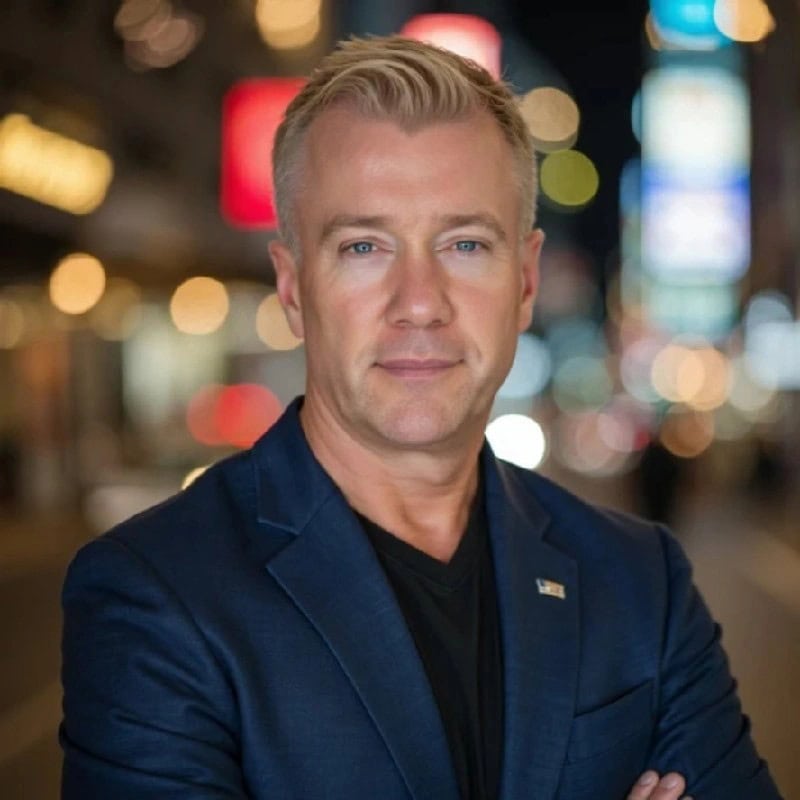
Eight years ago, Anthony Roberts made a decision that not only changed the course of his career, but gave him a new sense of purpose.
“After years in the private sector, where success was often measured in profit margins, growth metrics and shareholder value, I transitioned into public service with the City of Ft. Lauderdale,” says Roberts, who joined the City as a human resources manager for recruitment in 2018.
“At the time, I knew I wanted my work to matter in a deeper way. What I did not fully realize was how profoundly meaningful it would become to help but not companies, but communities,” continues Roberts, who went on to serve as assistant director of human resources, talent development with the City before departing in December 2022.
Roberts’ next stop was with the City of Atlanta, serving as deputy commissioner of human resources for nearly two years before moving back to the Sunshine State, taking a position as assistant director of human resources with the City of Hollywood, Fla., in April 2024. He is now the City’s assistant director of human resources and risk management.
These public service roles have “reshaped my perspective on human resources, leadership and impact,” says Roberts, whose time in the private sector included HR responsibilities with Xerox, Kelly Services and Charter Schools USA.
“In the private sector, the focus was often on business outcomes. In public service, I quickly learned that every hiring decision, every employee development opportunity, every recruitment effort and every policy improvement directly affects residents’ daily lives,” he says.
“The people we recruit are much more than employees. They are the individuals maintaining public safety, improving infrastructure, delivering essential services, supporting economic development and shaping the quality of life within our cities.”
Roberts, who holds a bachelors in business administration/marketing and master’s work in human resources and adult and higher education from Morehead State University, has seen firsthand how strategic HR and recruitment can strengthen an entire public sector organization.
At the City of Ft. Lauderdale, for instance, Roberts worked with departments facing critical workforce challenges, helping these functions attract talent committed to public service.
“I saw how placing the right employee into the right role could improve operations, support departmental morale and ultimately service delivery for residents.”
What impacted him most, though, were the personal stories—the applicant who said that receiving a job opportunity with the city “changed the trajectory of their family’s future,” or the employee who “discovered new confidence and career growth through development and engagement initiatives.”
These types of moments “reinforced something important to me,” says Roberts, who also holds a PSHRA Executive Leadership certification. “Human resources in government is not transactional work. It is transformational work.”
Such experiences have followed him through his time with the City of Atlanta and City of Hollywood, “where I continue to carry that same passion and purpose. Every recruitment campaign, every leadership initiative, every employee engagement effort and every strategic workforce conversation represents an opportunity to make a lasting impact.”
Thus far, one of the most rewarding aspects of Roberts’ public service journey has been helping others realize that “government careers are more than jobs. They are opportunities to serve, grow and make a difference.”
Public sector HR is “uniquely powerful, because the work extends far beyond internal operations,” he adds.
“When we recruit exceptional talent, employees provide better services to residents. When we support employee development, departments become stronger and more innovative. When we build positive workplace cultures, entire communities benefit from the results. That is the impact of public service.”
As he looks back on the eight years he’s spent in public service, Roberts finds that moving from the private sector into government work gave him something he didn’t know he was searching for: purpose connected directly to people and community.
Today, success is no longer measured simply by numbers or profits,” he says. “It is measured by the employees we empower, the departments we strengthen, the residents we ultimately serve and the communities we help build together. And for me, that has been the most meaningful achievement of all.”
09 June 2026
Category
Stories of Impact


